Helping cities
achieve climate action
UX DesignUX ResearchWeb PlatformB2B
Overview
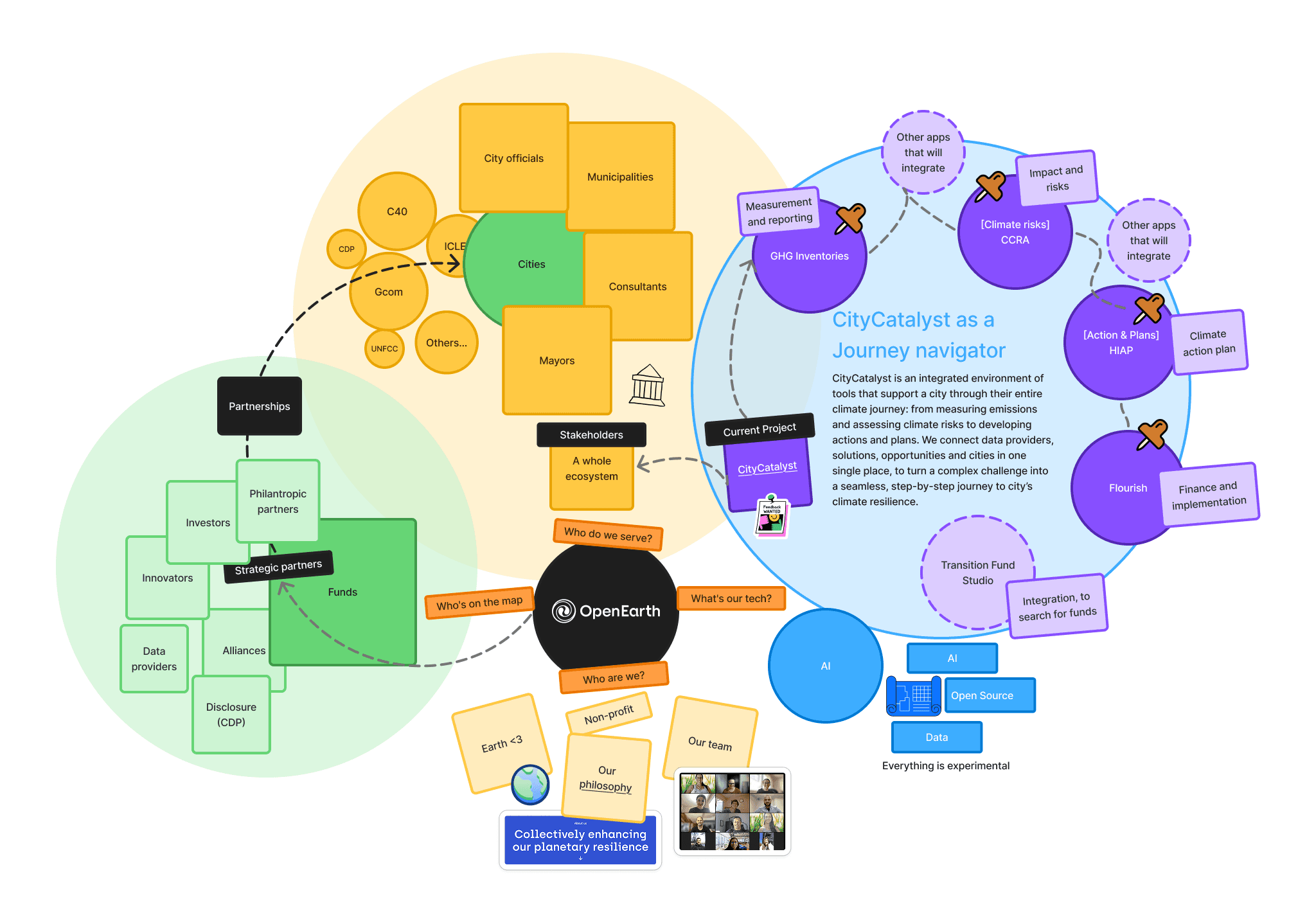
The Openearth Foundation is an organization that aims to provide powerful tools to cities or related parties to help in the achievement of climate action across regions. The platform, called CityCatalyst is a journey navigator that aims to provide a central hub with different applications that are useful in the climate journey such as; Making Co2 inventories, Measuring risk on city maps, Creating an action plan, Getting help preparing projects to apply for funding, etc.
How can we facilitate projects for adaptation,
resilience, climate change and civilian risk?
My task was to provide an audit of the tools at hand and propose improvements across the platform as well as deeply dive into research with city officials, workers and consultants to provide a better context for the organization and work through insights.
The process
Auditioning the main services
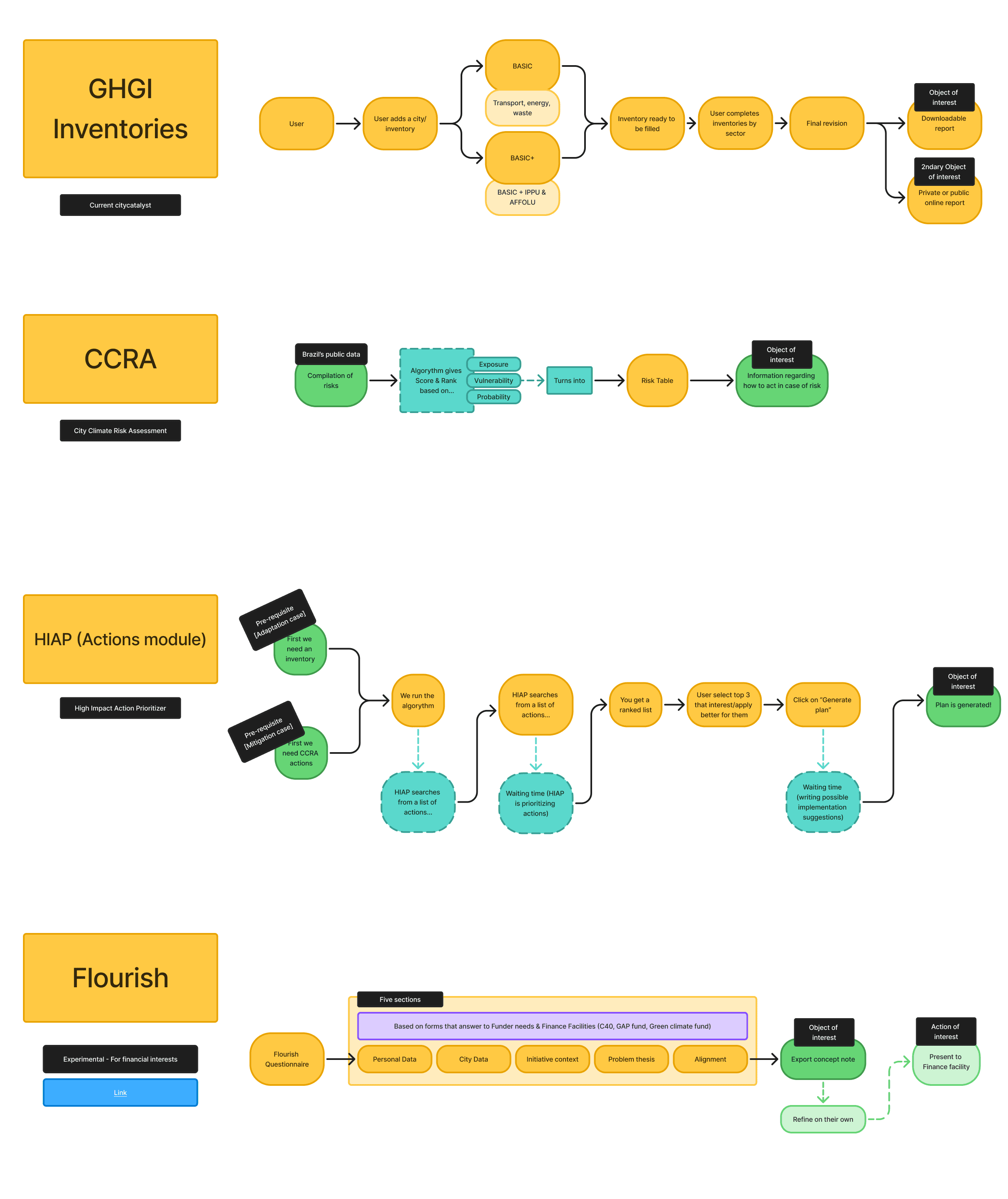
The first thing was to dive deeply into the different tools proposed by the organization; CAP (Climate Action prioritization), CCRA (Climate risk assessment) and GHG Inventories (Co2 measurements). All with their own set of features and outcomes.
Research, Benchmarking, Market exploration
I also proposed to gather all the current internal knowledge about the status quo and work through some artifacts to be able to share ideas and information horizontally (with devs and beyond the product team). As well as perform traditional research interviews with the cities we had access to (more than 2000 cities in Brazil). We managed to interview more than 40 people including cities, officials, municipality workers, consultants, researchers, data providers and gathered insights to procure a better roadmap and products.
Working through prototypes & Ideas
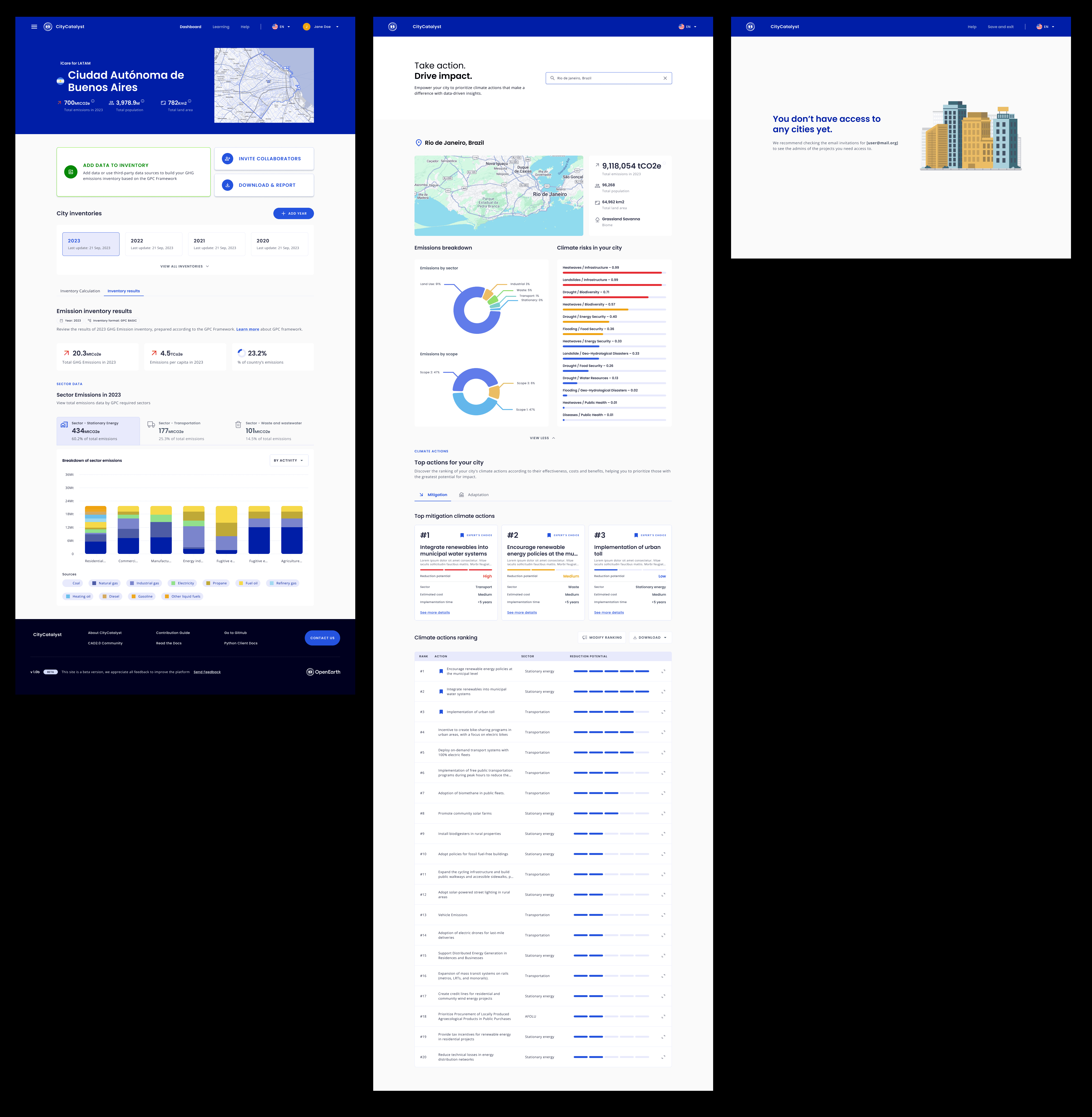
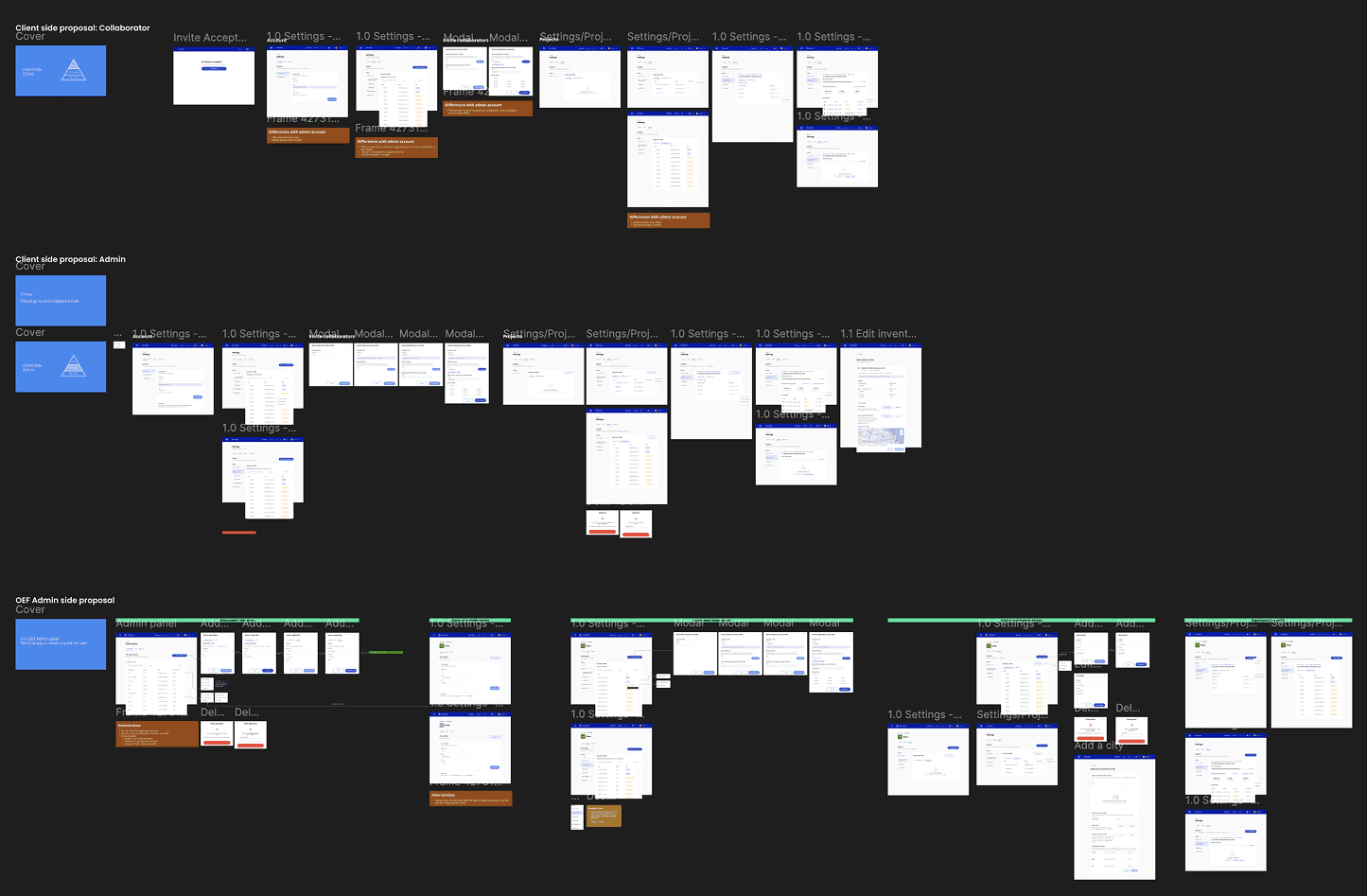
We ended up proposing both prototypes and ideas for concepts that could be exploited, explored or built; Like an onboarding for the inventory module, the unification of the app into a "Journey navigator" tool that would allow you to use only the needed modules; A centralization of data to be able to provide more information through satellite services, dashboards, reports and insights integrated into the different tools, etc.
Testing and refining
We would integrate testing in the design process to be able to test the quality and functionality of the provided designs and ideas we had at hand. A lot of our users were new and others would already be used to the platform and had already been introduced to it. We managed to make many improvements in both the current tools and propose new features and ideas for the future.
Conclusion
I am a designer that is much more used to work in non-commercial products. Products that aren't searching for profit are hard to work with because the product won't be able to recover much hard data from whether the product is being successful or not. This is however something that can be achieved longterm since working with cities and municipalities is indeed much more intricate than working with commercial users that are clearer in whether or not something might be working for them. All in all this was a wonderful experience that taught me to try to understand the context of a tool and a market better.