Air Quality &
Awareness
Client
FIUNA, FTU
Role
UI/UX Designer
Location
Asunción, Paraguay
Tools
Figjam, Figma
Overview
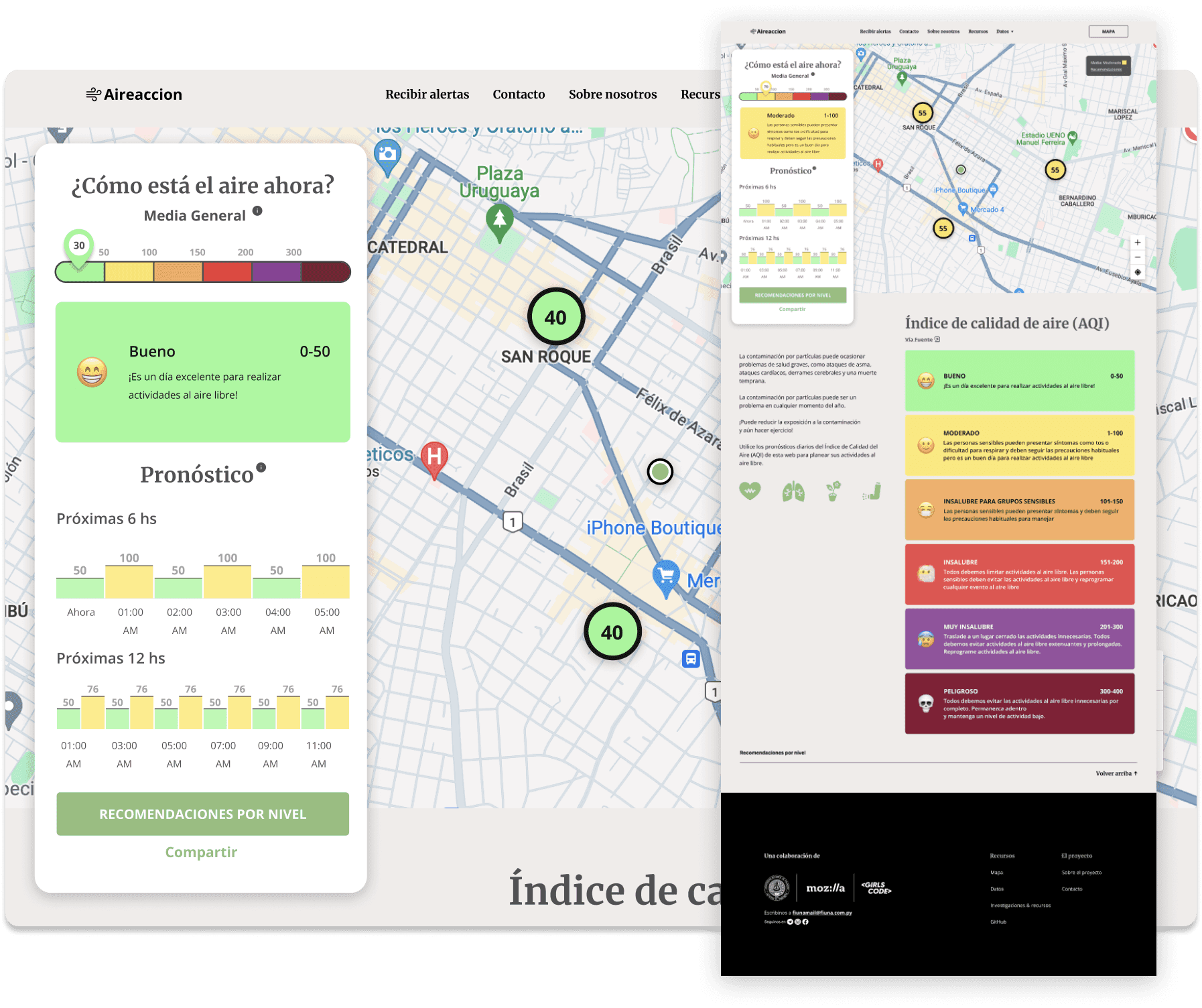
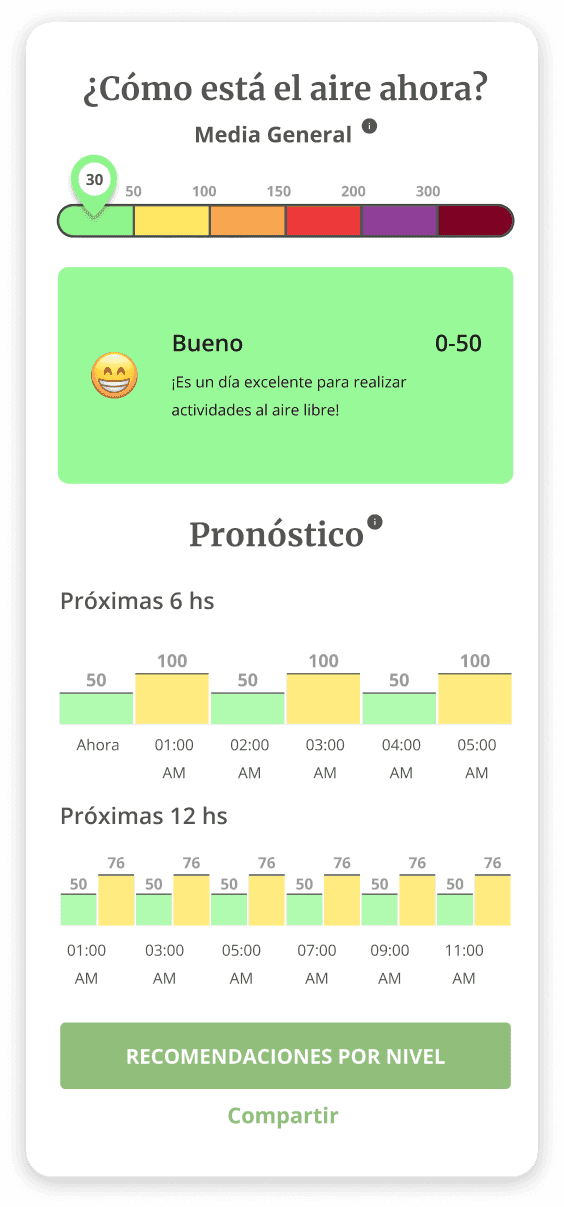
"Air for Asuncion" was selected for the Mozilla Technology Fund in 2024 to help inhabitants of Asuncion measure and track air quality. The National University of Engineering needed to give their sensor system an interface that would display air quality data and available resources.
How can we let people have
access to this information?
Before & After research
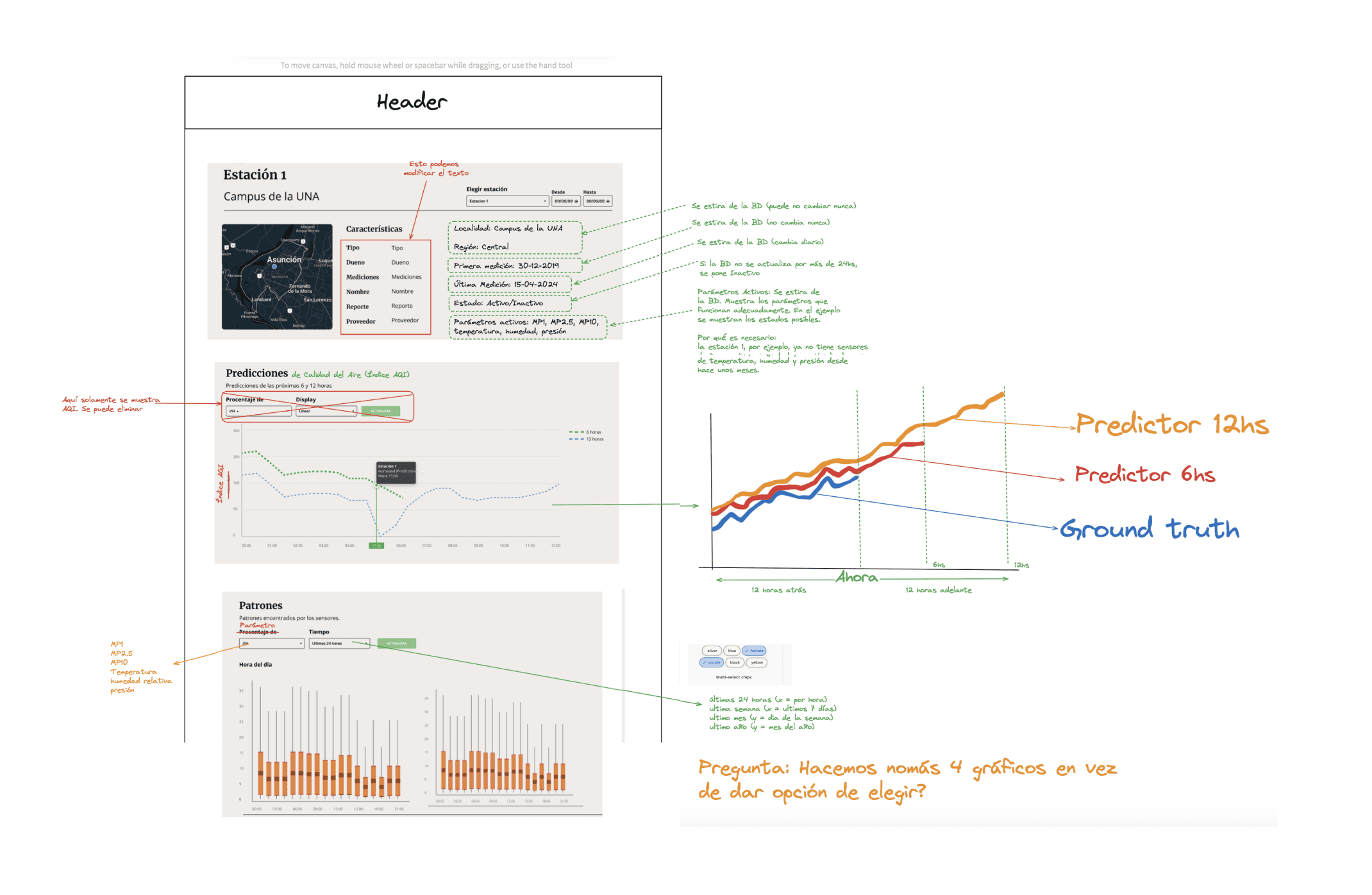
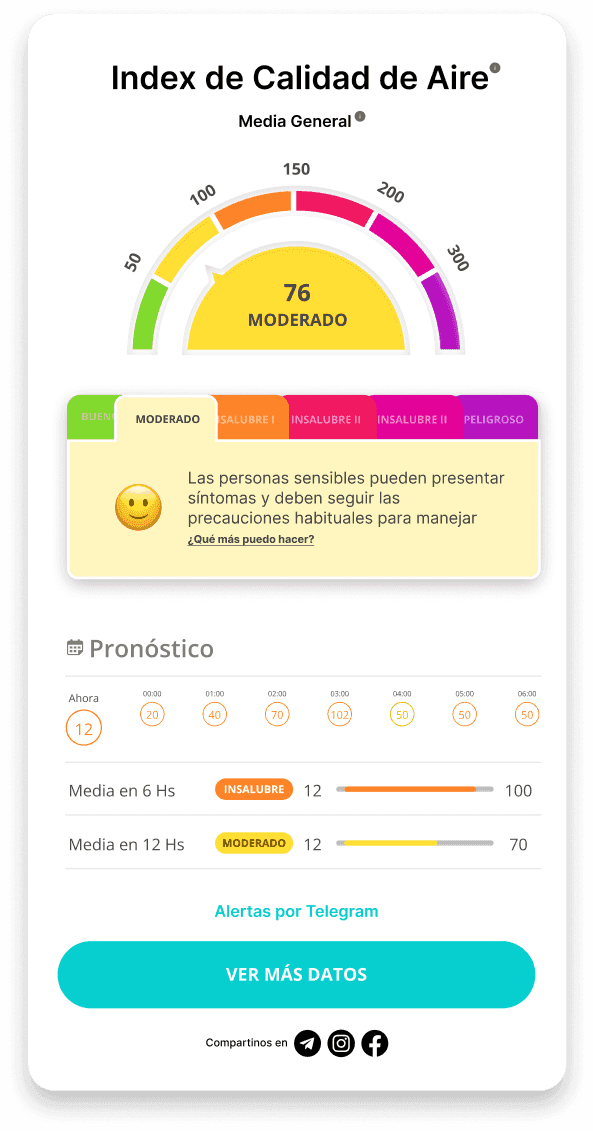
Initial ideas and assumptions before diving into research with the team and the university.
Before
After
Process
- Interviews with stakeholders
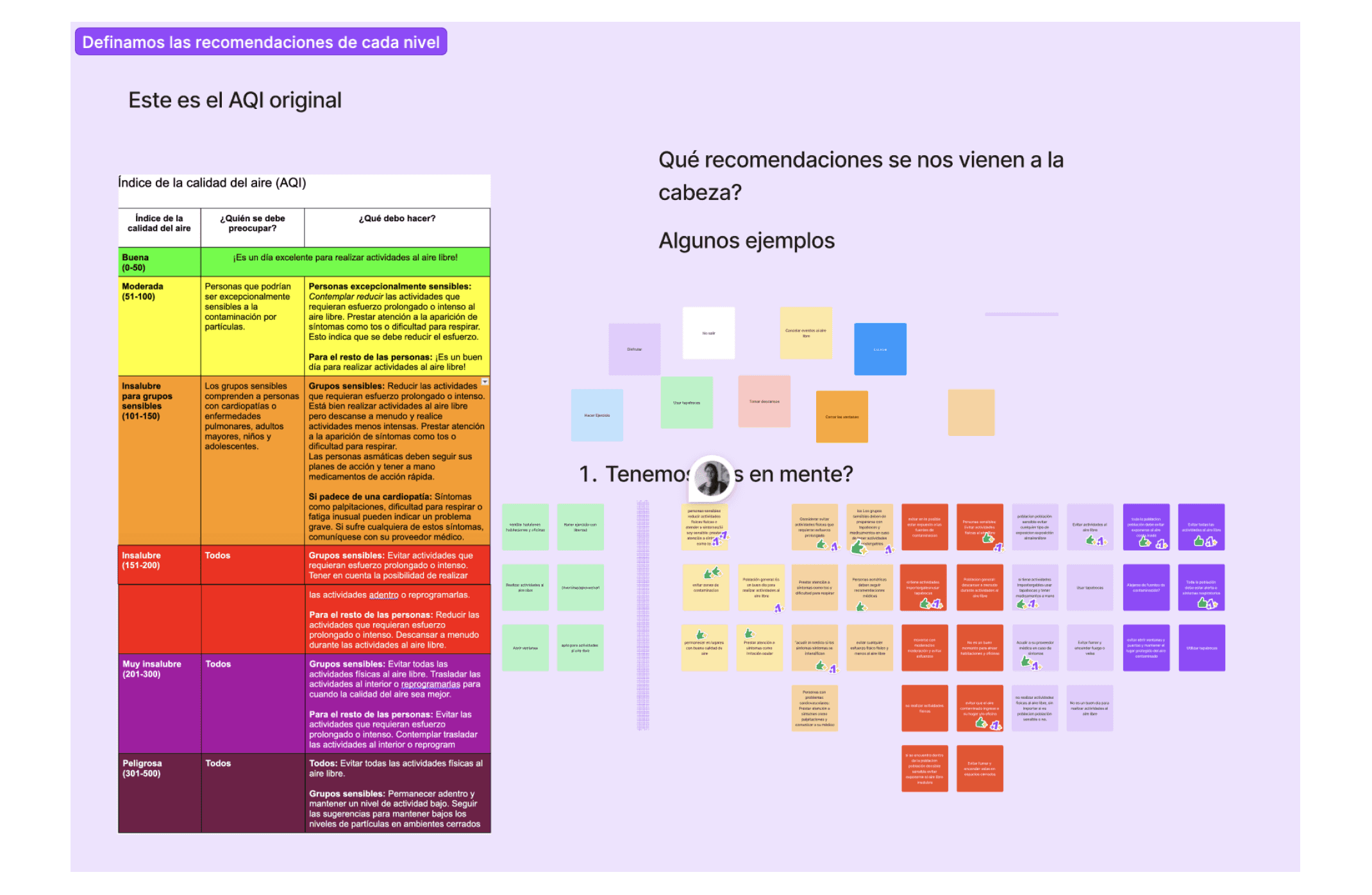
We interviewed the parties involved in the project to understand the area of focus, limitations, resources, and overall needs. - Workshops with stakeholders
Workshops helped us funnel information, clarify goals, and test our assumptions to help shape the future platform. - Initial Prototyping & Iterations
Prototyping started from the beginning, enabling us to quickly iterate via guerrilla testing by analyzing the proposed wireframes. - User Testing and Refinement
User testing gave us insights into the changes we needed on the prototype to improve the accuracy of our outcomes. - Documentation
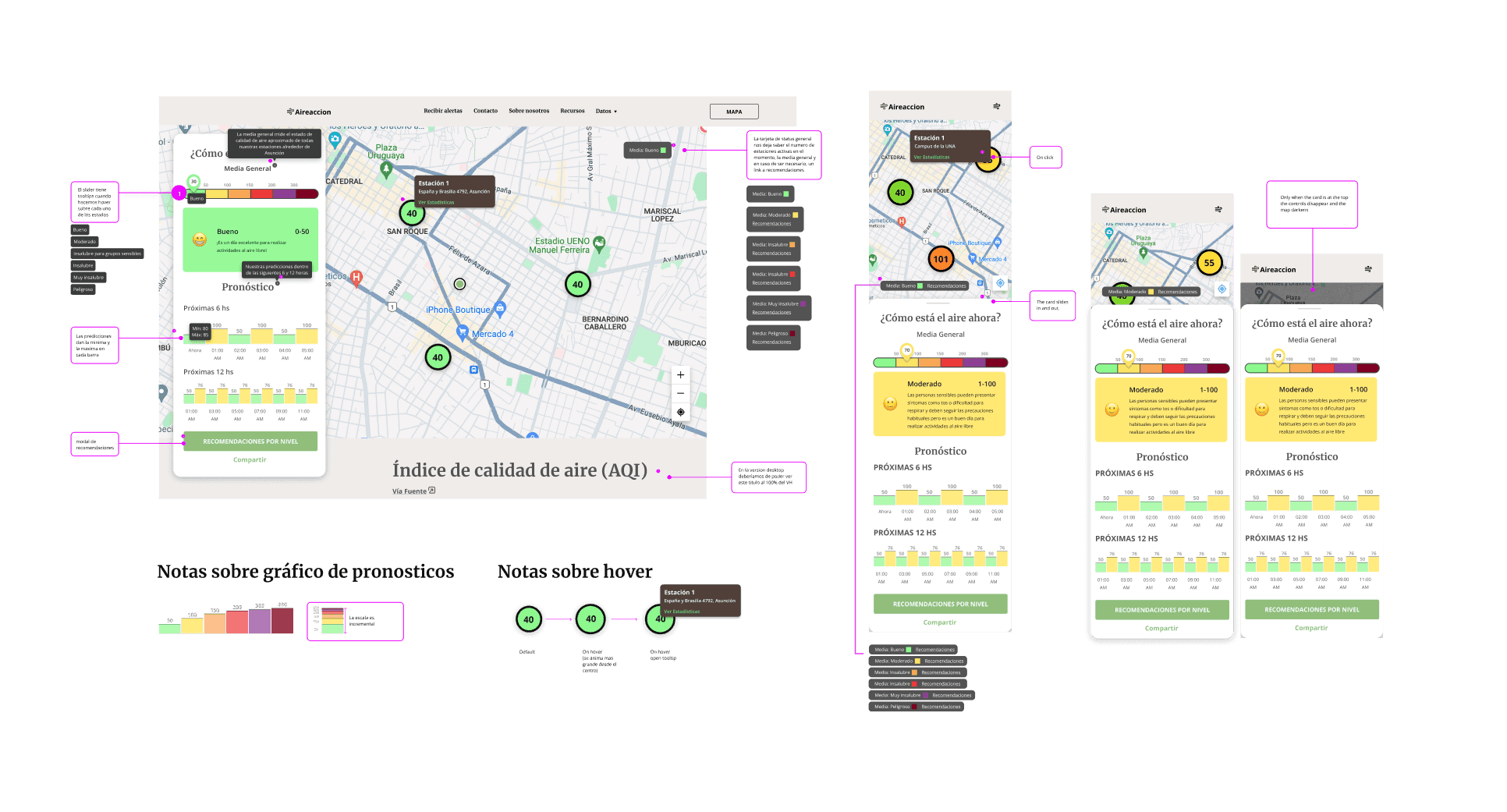
After preparing the high fidelity prototype with the latest changes, documentation was developed on micro-interactions for the map and general use.
Conclusion
By diving deep into the context of the problem with the academics, engineers and users, we were able to quickly iterate a solution that integrated insights from all parties involved. Testing with potential users brought us a world of ideas for future iterations, add-ons and content sharing strategies. This project successfully achieved its goal to communicate information simply and openly thanks to great team work and coordination.